


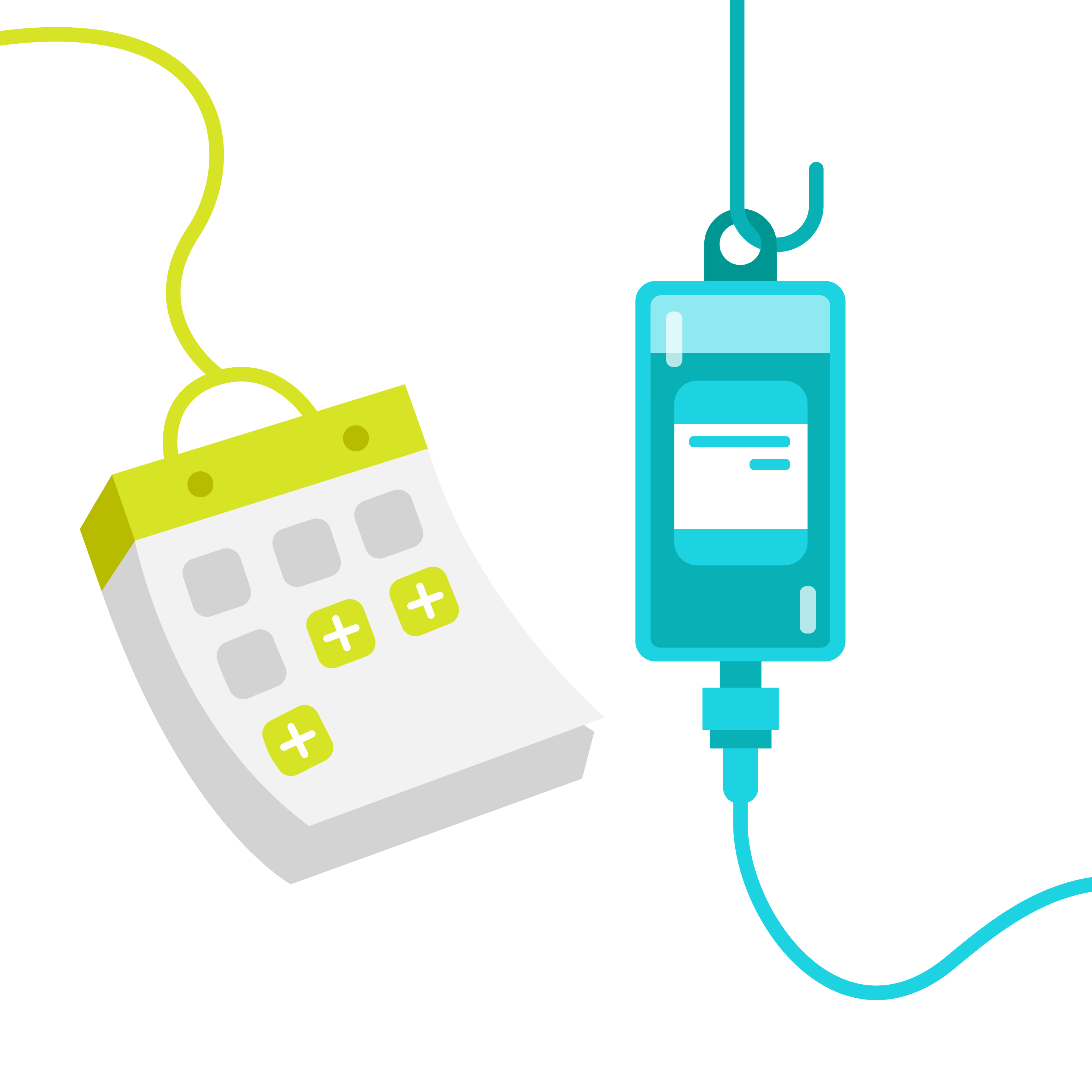
Sustainability interventions in nursing wards
Nursing practice
Replacing IV lines every seven days
IV lines, the part of the infusion system that remains outside the body and connects to the intravenous catheter, are currently replaced every four days to prevent infections. Research shows that replacing IV systems every seven days does not increase the risk of infection. This saves materials and time for nurses.
Intervention
Reduce the frequency of changing infusion lines from once every four days to once every seven days.
Exclusion: Lines used to administer total parenteral nutrition (TPV), blood, propofol and cytostatics are excluded from this intervention due to other guidelines.
Procedure
See the procedure for implementing a different approach in nursing practice, and consult the step-by-step plan for more information on setting a goal, implementation, and evaluation.
Additionally, the use of infusion lines for 7 days may deviate from the manufacturer's instructions, which specify 4 days. To implement this intervention, an internal procedure is usually required in your hospital to document it. Generally, the Medical Technology department can assist with this. Each hospital has its own procedure for this. An example of how Amsterdam UMC has organized this can be found here.

Environmental impact
Measured in CO2-emissions by reducing the number of infusion lines. Want to know more about the environmental impact? See the bottom of this page for more information.
Current situation
Change 1 infusion line every 4 days = 0.10 kg CO2-eq
New situation
Change 1 infusion line every 7 days = 0.06 kg CO2-eq
-40% CO2

The environmental impact of an infusion line that is used for 7 days is approximately one and a half times lower than an infusion line that is used for 4 days.
Changing an infusion line every 7 days instead of 4 days with 100 patients for one year saves
600
kg CO2-eq
and is equivalent to driving 3,088 km
When is it implemented?
This intervention is considered implemented when the IV lines in the hospital's nursing units are replaced every seven days and the difference in CO₂-equivalent (kg) has been calculated.
How is this measured?
The environmental impact of this intervention can be determined using the purchasing data of the number of IV lines, see the procedure for measuring an intervention using purchasing data.
Note: Other interventions may affect the results of this one. If the "Using a single IV system across all departments" intervention is implemented at the same time, it may affect the purchasing data for IV lines. Implement the "Use the same infusion system on all units" intervention at a different time to measure the effect accurately.
Resources
Click here for the best practice from the Green ICU on the usage duration of IV lines.
Click here for an example from St. Antonius Hospital where IV lines in the ICU and MC are replaced every seven days.
Footnote
- van de Pol I, Roescher N, Rigter S, Noordzij PG. Prolonged use of intravenous administration sets on central line associated bloodstream infection, nursing workload and material use: A before-after study. Intensive Crit Care Nurs. 2023 Oct;78:103446.
- Rickard CM, Marsh NM, Larsen EN, McGrail MR, Graves N, Runnegar N, Webster J,..., Playford EG. Effect of infusion set replacement intervals on catheter-related bloodstream infections (RSVP): a randomised, controlled, equivalence (central venous access device)-non-inferiority (peripheral arterial catheter) trial. Lancet. 2021 Apr 17;397(10283):1447-1458.
View our other interventions
Nursing practice
Reducing maintenance IV flow rate
A maintenance IV with NaCl 0.9% at a flow rate of 5 ml/hour is often used to keep the IV line open for patients not receiving intravenous medication. Reducing the pump rate to 2 ml/hour lowers NaCl 0.9% use, allowing for smaller infusion bags or less frequent bag replacement. This is more sustainable and reduces material consumption.

