


Sustainability interventions in nursing wards
Nursing practice
Reducing maintenance IV flow rate
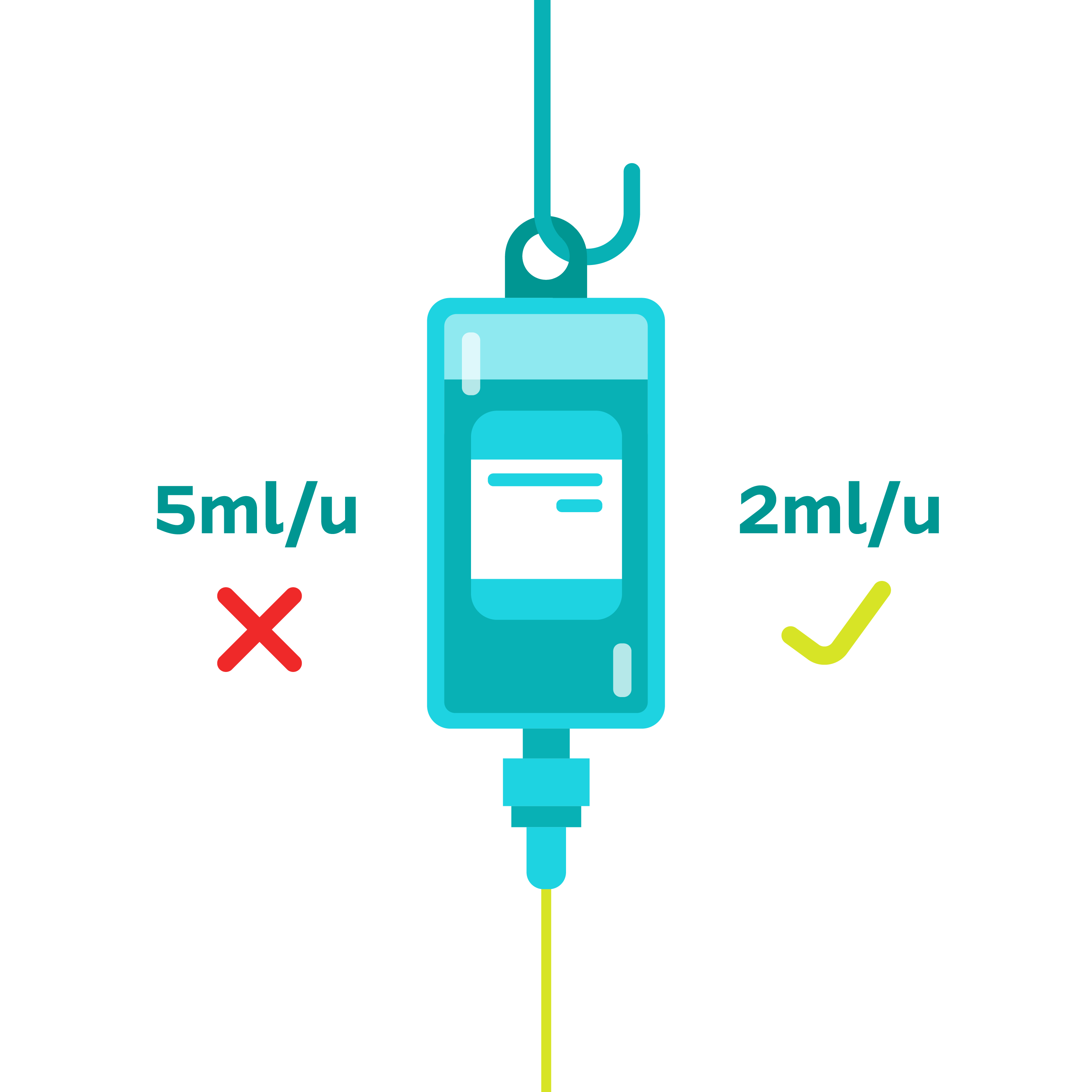
A maintenance IV with NaCl 0.9% at a flow rate of 5 ml/hour is often used to keep the IV line open for patients not receiving intravenous medication. Reducing the pump rate to 2 ml/hour lowers NaCl 0.9% use, allowing for smaller infusion bags or less frequent bag replacement. This is more sustainable and reduces material consumption.
Intervention
Maintain a wake infusion (NaCl flow) of 2 ml/hour to keep a central line or peripheral infusion accessible instead of 5 ml/hour.
Implementation approach
Look at the approach for implementing a different method in nursing practice and consult the step-by-step guide for more information on setting goals, implementation, and evaluation.

Environmental impact
Measured in CO2-emissions by reducing the number of NaCl 0.9% infusion bags. Want to know more about the environmental impact? See the bottom of this page for more information.
Current situation
1 wake infusion of NaCl with a walk-in rate of 5 ml/hour
New situation
1 wake infusion with a walk-in rate of 2 ml/hour
Which infusion bag is most durable depends on the total infusion period. At a walk-in rate of 2 ml/hour, the most sustainable choice is: 50 ml for 0-24 hours, 100 ml for 24-60 hours, 250 ml for 60-108 hours and 500 ml for 108-168 hours.
Impact per infusion bag NaCl 0.9%
50 ml infusion bag = 0.16 kg CO2-eq
100 ml infusion bag = 0.20 kg CO2-eq
250 ml infusion bag = 0.38 kg CO2-eq
500 ml infusion bag = 0.59 kg CO2-eq

With an infusion period of 48 hours (two days) and a walk-in rate of 2 ml/hour, a 100 ml infusion bag is sufficient. You then don't need a 250 ml bag if the run-in rate had been 5 ml/hour. This reduces CO2-eq emissions by 47%!
Reducing 100 500ml infusion bags saves
59
kg CO2-eq
and is equivalent to driving 303 km
When is it implemented?
This intervention is considered implemented when a 2ml/hour infusion rate is used on the nursing units of the hospital.
How is this measured?
The effect of this intervention at the hospital level cannot be reliably determined based on variations in purchasing data for NaCl 0.9% infusion bags.
Analyze the existing protocol to assess implementation at the hospital level. Check whether an infusion rate of 2ml/hour is listed as the standard and observe whether the protocol is followed in practice. This can be done using the pharmacy administration records, if available and reliable. If this is not recorded, a measurement can be done on the nursing units by determining the number of patients with a maintenance infusion per time unit. Guidance for this measurement can be found in the MS Teams channel if your hospital participates in the Greening healthcare together program.
At the department level, the number of maintenance infusions can be estimated based on a maintenance infusion measurement. This allows for the calculation of the number of infusion bags (volumes of 50, 100, 250, or 500 ml) used for a maintenance infusion. The environmental impact of this can be calculated using the environmental impact calculation tool. This tool can be found in the MS Teams channel if your hospital participates in the Greening healthcare together program. However, this calclation on department level is not mandatory for the program.
Resources
Click here for an example from the practical issues discussed by Medisch Contact.
Click here for the recommendation from the Groene IC, section ‘lower pump settings’.
Click here for the recommendation from the working group of the Dutch Association of Hospital Pharmacists in appendix 2, measure 3. This recommendation was made in November 2024 during the infusion fluid availability issue.
View our other interventions
Verpleegkundig handelen
Non-sterile bladder catheter insertion
Since July 2024, bladder catheterisation may be performed using the new ‘no-touch technique’. In this method, non-sterile gloves are used, and the genital area is cleaned with tap water. This more sustainable approach requires fewer sterile materials and saves time, as the procedure can be performed by a single nurse. With this intervention, nurses put the new guideline into practice.
Nursing practice
Wound care irrigation with tapwater
For acute wounds (traumatic or surgical), irrigation using a female catheter filled with lukewarm tap water is recommended instead of NaCl 0.9%. This increases patient comfort and reduces material use, as a new sterile NaCl 0.9% bottle or sterile collection tray is no longer needed every 24 hours.
Nursing practice
Using the same infusion sets on every ward
When hospital departments use different IV systems, IV lines may need to be replaced when a patient is transferred because the systems are not compatible. This leads to unnecessary waste, takes additional time, and can cause discomfort for the patient. A single, standardised IV system prevents this.

