


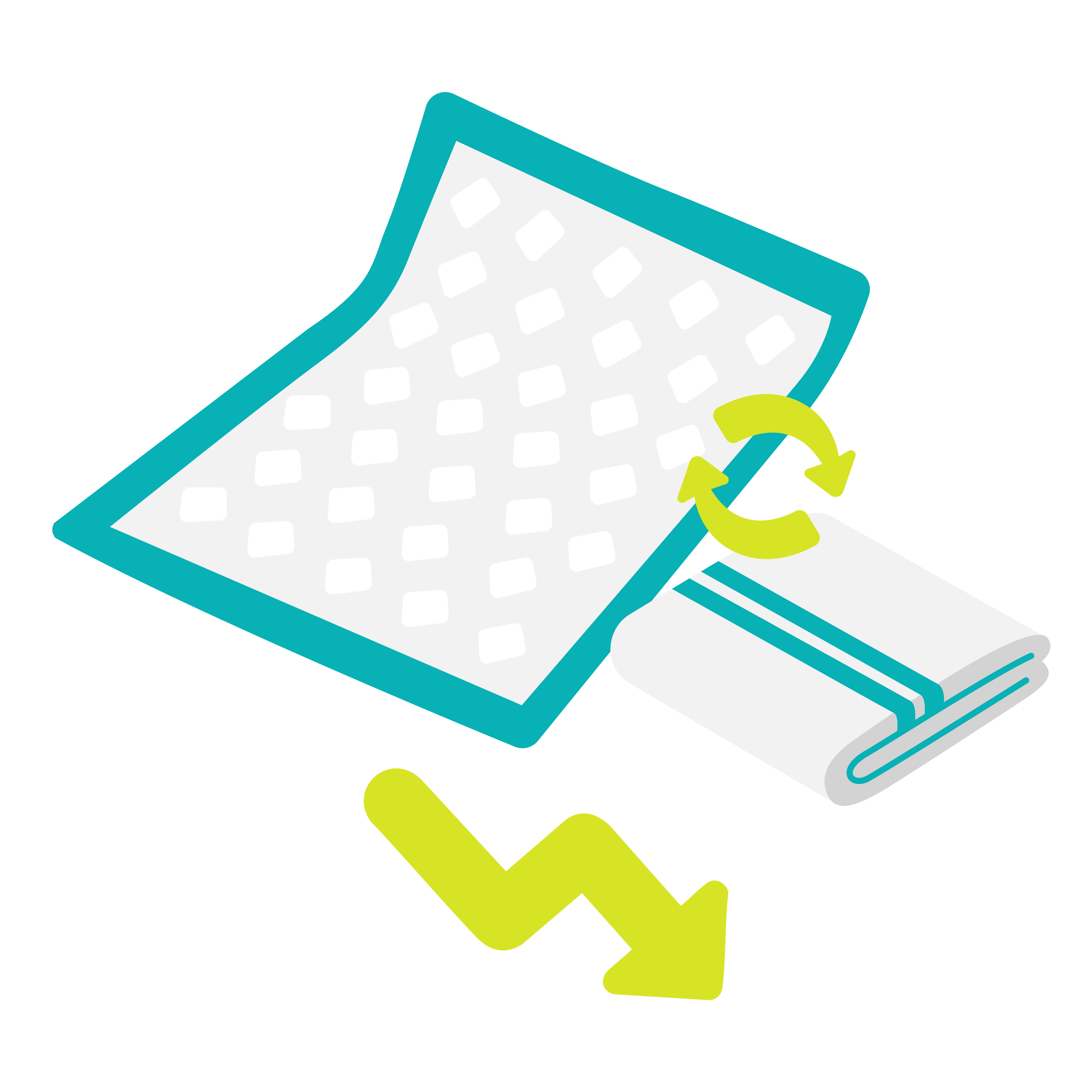
Sustainability interventions in nursing wards
ADL
Reducing absorbent mat use
Disposable absorbent mats are designed to absorb large amounts of body fluids from patients. In practice, they are also used for other purposes, such as wiping up spilled liquids on the floor. In many cases, a towel or collection tray will suffice. Because of their high consumption in hospitals, absorbent mats have a significant environmental impact1.
Intervention
Reduce the use of fiber mats by only using fiber mats when there is an indication for this.
Implementation approach
- Look at the approach for reducing the use of a product.
- In the implementation plan, describe possible alternatives and encourage awareness by, for example, storing absorbent mats less visibly than towels. Place a poster near the separate stock of absorbent mats with the message: “Note: only use absorbent pads to collect large amounts of moisture.”
- Consult the step-by-step guide for more information on setting goals, implementation, and evaluation.

Environmental impact
Measured in CO2 -emissions by reducing the number of fiber mats. Want to know more about the environmental impact? See the bottom of this page for more information.
The environmental impact has been calculated for one cellulose mat
- 1 cellulose mat 60x60 cm, 28 grams = 0.202 kg CO2-eq
- 1 cellulose mat 60x60 cm, 40 grams = 0.266 kg CO2-eq

Two types of fiber mats were calculated: one 28-gram fiber mat with 330 grams of absorbency and one 40-gram fiber mat with 570 grams of absorbency.
Reducing 100 fiber mats saves
20-27
kg CO2-eq
and is equivalent to driving 103 to 139 km
When was it implemented?
This intervention is considered implemented when the set goal has been achieved, with fewer absorbent mats being used compared to before the implementation, and the difference in CO₂ equivalent (kg) has been calculated.
How is this measured?
The environmental impact of this intervention can be determined using purchasing data for the number of absorbent mats, see Measuring an intervention using purchasing data.
Note: Other interventions may affect the results. If the “Washable underpad” intervention is implemented at the same time, it may influence the purchasing data for cellulose mats. Implement the “Washable underlay” intervention after the implementation of this intervention to measure the effect accurately.
Resources
Click gentleman for an example of avoiding (refuse) and reducing (reduce) cellulose mats at UMCG.
Footnotes
- Dutch Federation of University Medical Centers (June 2024). National survey of medical disposables at UMCs.
View our other interventions
ADL
Reducing linen use
Linen is used for many different purposes. Reducing linen use is not only better for the environment but also benefits patients by helping to prevent pressure ulcers. The do-not-do recommendations1 advises: “Avoid or limit unnecessary layers underneath the patient, such as linen, positioning materials, cellulose mats, incontinence materials, clothing, and bedding.”
Nursing practice
Wound care irrigation with tapwater
For acute wounds (traumatic or surgical), irrigation using a female catheter filled with lukewarm tap water is recommended instead of NaCl 0.9%. This increases patient comfort and reduces material use, as a new sterile NaCl 0.9% bottle or sterile collection tray is no longer needed every 24 hours.

