


Sustainability interventions in nursing wards
Nursing practice
Containers made from recycled plastic for specific hospital waste
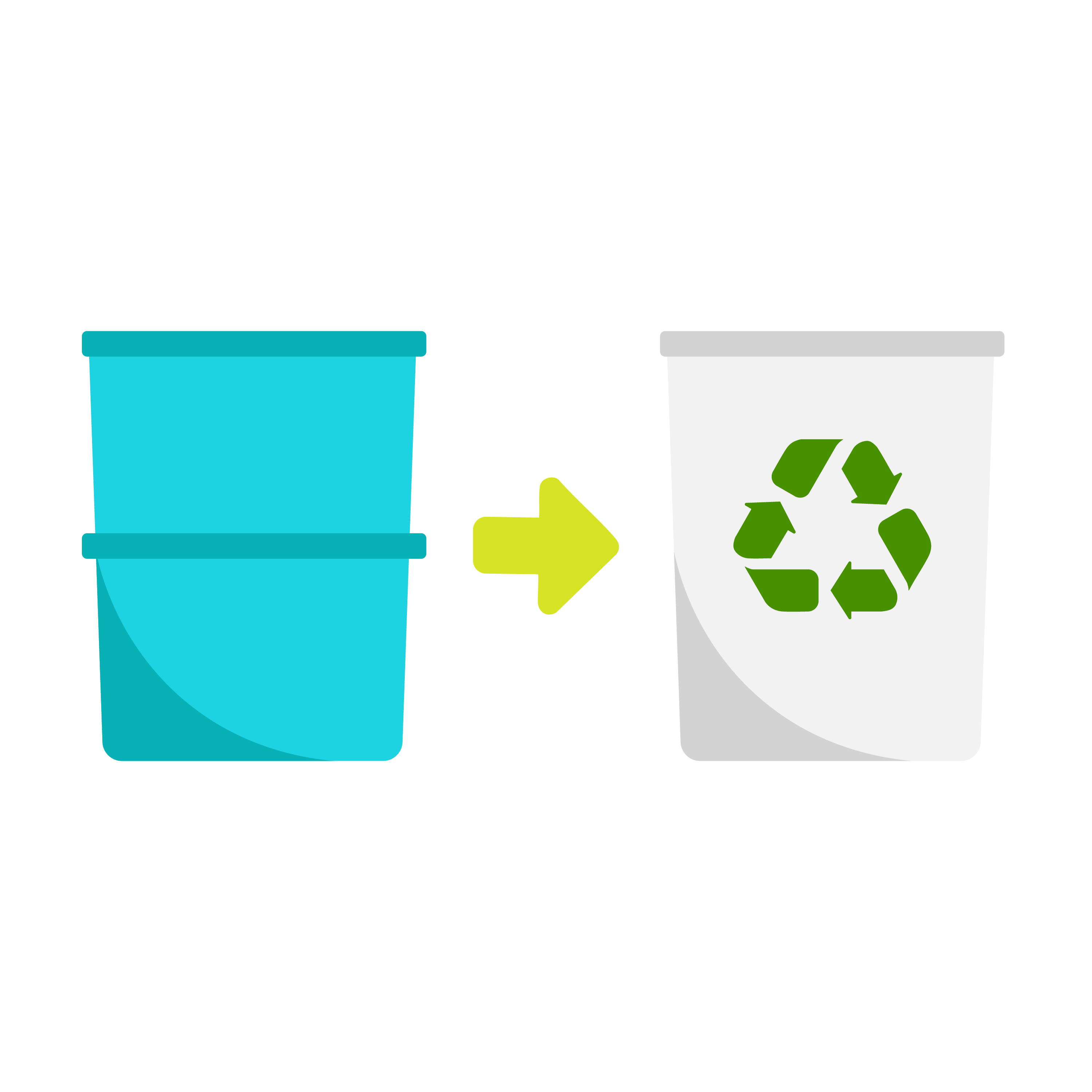
Nursing wards produce a lot of waste, including specific hospital waste (SZA). Nurses collect this waste in separate SZA tanks, also known as Wiva barrels, recognisable by the blue barrel with a yellow lid. A more sustainable alternative made from recycled plastic, recognisable by its grey colour, has been developed.
Intervention
Specific Hospital Waste (SZA) collects in grey SZA drums made from recycled plastic instead of regular (blue) SZA drums.
Implementation approach
Look at the approach for implementing a (reusable) product and consult the step-by-step guide for more information on setting goals, implementation, and evaluation.

Environmental impact
Measured in CO2-emissions from less environmentally harmful material in SZA drums. Want to know more about the environmental impact? See the bottom of this page for more information.
Current situation
- Specific hospital waste is collected and processed in traditional SZA vessels (blue/yellow)
- Processing 1,000 kg of medical waste in traditional drums = 464.8 kg CO2-eq
New situation
- Specific hospital waste is collected and processed in SZA drums made from recycled plastic (grey)
- Processing 1,000 kg of medical waste into recycled drums = 425.3 kg CO2-eq
-8,6% CO2

In both types of drums, the incineration of waste has the greatest environmental impact. That is why it is important to take a good look at what really needs to be put in the SZA barrel and what can simply be disposed of with the residual waste.
1,000 kg of medical waste collected with recycled drums instead of traditional saves
39.5
kg CO2-eq
and is equivalent to driving 203 km
When is it implemented?
This intervention is considered implemented when nursing units in the hospital have switched to SHW containers made from recycled plastic, and the difference in CO₂-equivalent (kg) has been calculated.
How is this measured?
The environmental impact of this intervention can be determined using purchasing data for the number of SHW containers made from non-recycled materials, see "Measuring an intervention using purchasing data."
Resources
Click here for the article on the introduction of recycled SHW containers by SUEZ in collaboration with Mauser Benelux and QCP.
Click here for an example from Radboudumc, where they switched to recycled SHW containers, reducing their environmental impact by 57.3%.
View our other interventions
ADL
Reducing absorbent mat use
Disposable absorbent mats are designed to absorb large amounts of body fluids from patients. In practice, they are also used for other purposes, such as wiping up spilled liquids on the floor. In many cases, a towel or collection tray will suffice. Because of their high consumption in hospitals, absorbent mats have a significant environmental impact1.

